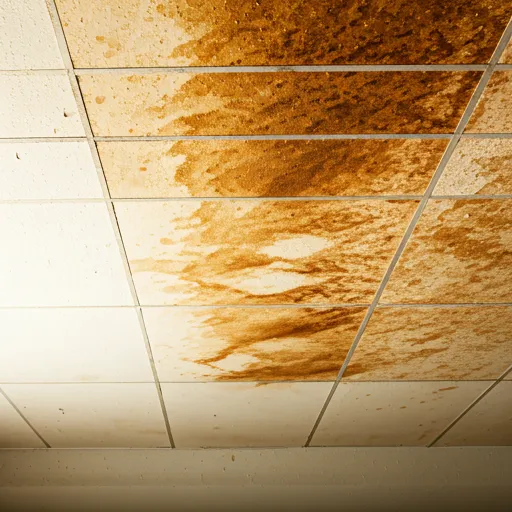
Compare your damage to these common symptoms. Visual identification helps us prepare the right equipment before we arrive.
Indicates an old or slow leak soaking through drywall layers. The stain is often larger than the visible spot.
Urgent: Water is pooling above. The weight load creates a severe risk of ceiling collapse.
Trapped moisture behind latex paint layers. "Water blisters" should be drained professionally.
Signifies long-standing moisture issues. Requires safe remediation to prevent spore spread.
We use thermal imaging cameras to locate the exact source of the leak without unnecessary demolition.
We set up barriers to prevent water or mold from spreading to unaffected areas of your home.
Industrial-grade dehumidifiers and air movers remove moisture from inside the ceiling cavity.
We repair the drywall, texture, and paint, leaving your ceiling looking brand new.
Understanding why this happens helps prevent future damage.
In humid climates, clogged condensate lines often overflow into attic pans and leak through ceilings.
Roof tiles displaced by high winds allow rainwater to penetrate the underlayment and soak insulation.
Leaks from bathtubs, toilets, or supply lines on the second floor often manifest as ceiling stains below.
Yes, but act carefully. Have a bucket ready underneath. Puncturing the blister relieves the weight and prevents the drywall from collapsing. However, this is a temporary fix—you must address the source of the water immediately.
Typically, yes. If the damage is "sudden and accidental" (like a burst pipe), most policies cover the restoration. Slow leaks caused by lack of maintenance might not be covered. We can help you navigate the claim process.
Depending on the extent of the saturation, structural drying usually takes 3 to 5 days. We monitor moisture levels daily to ensure the area is completely dry before starting reconstruction.