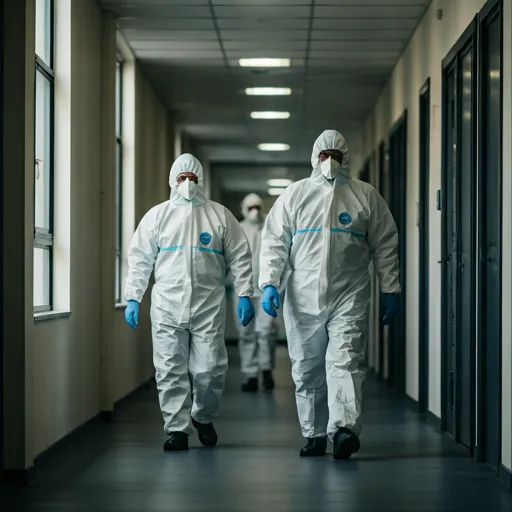
High risk of direct exposure to E. Coli, Hepatitis A, bacteria, parasites, and Salmonella.
Aerosolized bacteria can be inhaled without proper PPE, causing severe respiratory infections.
Sewage rapidly soaks into drywall, wood, and insulation, compromising structural integrity within hours.
Potential for dangerous methane and hydrogen sulfide buildup in enclosed spaces, creating explosion risks.
Toilet backups often involve “Category 3” black water. This occurs when the main sewer line is blocked, forcing waste back up into the bowl. This requires immediate snaking and decontamination of the surrounding floor.
When a septic tank is full or the drain field fails, sewage can pool in your yard or back up into drains. This creates a large-scale biohazard zone requiring specialized soil treatment and tank pumping.
Tree roots or grease can block the city main line connection. When this happens, sewage from your home has nowhere to go but back up into bathtubs and sinks.
Most standard homeowners policies DO NOT cover sewage backup unless you have a specific endorsement for "Water Backup and Sewer Sump Overflow".
We work directly with all major insurance carriers.
Our team documents all damage for your claim.
We can help verify your coverage immediately.
We don't just clean; we decontaminate. Our 5-step bio-wash process ensures your property is medically safe for re-entry.
Sealing the affected area to prevent cross-contamination to clean zones.
Industrial pumps remove standing black water and sewage solids immediately.
Application of hospital-grade biocides to kill bacteria and viruses on all surfaces.
High-velocity air movers and dehumidifiers remove moisture absorbed by the structure.
Scientific verification that surface cleanliness levels meet safety standards.
If the spill is contained to a small area (like a single bathroom) and we can set up negative air pressure containment, you may be able to stay. However, for large scale backups affecting HVAC systems or main living areas, we strongly recommend relocating to a hotel for 24-48 hours.
Yes, the 'sewer gas' smell can contain hydrogen sulfide and methane. While the smell itself is mostly a nuisance, high concentrations can be harmful. The bigger risk is the invisible airborne pathogens that accompany the smell.
Pouring bleach on sewage does not remove the solids or the pathogens absorbed into porous materials like wood or drywall. Bleach is a surface disinfectant; it cannot penetrate structural materials where bacteria hide. Professional extraction and removal of affected materials is required.